Interior Painting Southampton MA: Refresh Your Home With Professional Color and Craftsmanship
A good interior paint job changes more than color. It changes how a room holds light at nine in the morning, how clean the trim looks against a wood floor, how calm a bedroom feels at night, and how confidently a homeowner invites people through the front door. In a place like Southampton, where homes range from older farmhouses to newer builds and quiet in-town properties, interior painting is rarely just decorative. It is part repair, part design, and part protection.
Homeowners often start with a simple goal. Freshen the living room. Brighten a dark hallway. Update kitchen cabinets without replacing them. Cover years of wear around doorways, baseboards, and stair rails. Then the work begins, and that is where the difference between a quick repaint and a lasting finish becomes obvious. Surface prep, patching, trim lines, sheen selection, and product choice matter every bit as much as the color chip that looked perfect under store lighting.
When people search for interior painting Southampton MA, they are usually looking for more than someone who can roll paint onto drywall. They want a crew that respects the house, keeps a clean site, communicates clearly, and knows how to leave behind rooms that feel sharp and finished rather than merely repainted.
What professional interior painting really changes
Fresh paint is one of the few home improvements that can make an immediate visual impact without tearing apart walls or living through months of construction. That said, the real value is not just in the before-and-after photos. It is in the details that only become obvious after the furniture is back in place and daily life resumes.
Ceilings look higher when cut lines are clean and consistent. Trim feels more substantial when it is leveled, caulked properly, and finished with the right sheen. Wall imperfections that once caught every slant of afternoon light fade into the background when patching and sanding are done well. Even noise seems lower in a room that looks orderly and cared for. People do not always expect that effect, but it is common. Visual clutter has a way of making a room feel unsettled.
In Southampton homes, there is often a mix of surfaces and eras. One room may have older plaster with hairline cracking. Another may Arcadia Painting Co Reviews have newer drywall with nail pops or uneven previous repairs. A hallway may have layers of old paint built up over decades, especially around trim and casing. Kitchens and baths bring their own set of issues, from humidity to grease film. A professional approach accounts for all of that before a single finish coat goes on.
The hidden work behind a polished result
Most homeowners notice color first. Painters notice substrate. That difference in focus explains why some jobs still look crisp five years later while others start showing flaws in a matter of months.
A solid interior project usually starts with a walk-through that goes beyond square footage. Which walls get harsh natural light? Where are the settlement cracks? Is the existing coating flat, eggshell, satin, or something inconsistent from patchwork repainting? Has there been water staining near windows or on a second-floor ceiling? Are there tannin bleed issues on old trim or knots in painted woodwork?
These are not minor concerns. They influence primer selection, patching compounds, dry times, and the number of finish coats needed. A deep navy over pale beige is one thing. A pale warm white over a dark red dining room is another. The labor can be very different even when the room size is the same.
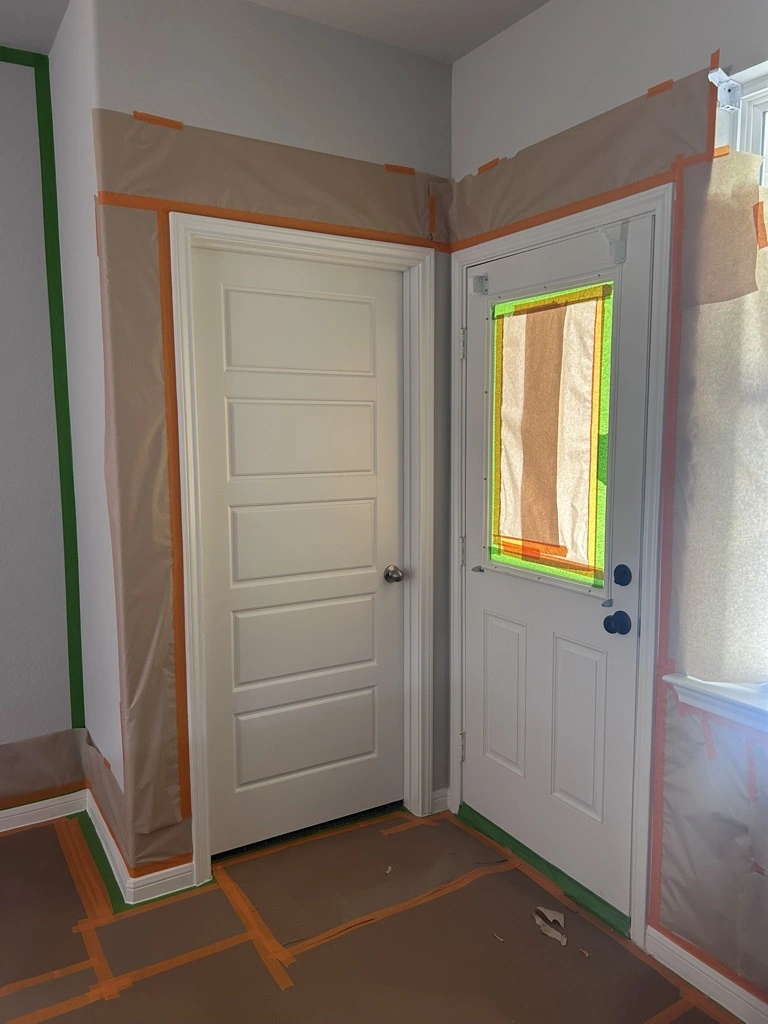
Preparation tends to be where experienced crews earn their reputation. Floors need full protection, not a few scattered drop cloths. Fixtures should be removed or masked cleanly. Wall dings require filling with compounds suited to the depth and location of the defect. Sanding dust needs control, especially in occupied homes. Gaps along trim need caulk where appropriate, but not every crack should be filled blindly, particularly in older houses where movement and seasonal expansion need to be considered.
This is why a reputable residential painting contractor does not rush the first day. Careful prep saves time later and prevents the common problems homeowners hate most, flashing over patches, rough walls, drips on casing, roller marks in critical light, and cut lines that wander at the ceiling.
Color behaves differently in Southampton homes than it does on a sample card
Paint stores do their best, but small swatches can only tell you so much. A color that reads warm and inviting in a showroom can turn muddy in a north-facing room. A cool gray can feel crisp in one house and lifeless in another, depending on floor tone, window size, and tree cover outside.
Southampton has plenty of homes with mature landscaping and shaded lots, which often means less direct light indoors. That matters. Colors with too much gray can flatten out quickly in low-light conditions. Whites can swing yellow, pink, or blue depending on surrounding finishes. Open-concept areas can also create transitions that are harder than they look. A shade that works beautifully in the kitchen may fight the undertones in the adjacent living room.
This is one reason experienced painters often recommend testing larger sample areas or peel-and-stick samples in multiple spots before committing. Morning light, cloudy afternoon light, and lamp light all tell a different story. The goal is not to chase the perfect trend color. It is to choose a tone that still feels right after the novelty wears off.
For many house painting Southampton Massachusetts projects, the safest choices are not always the plainest. Soft whites, muted greiges, and warm mineral tones remain popular because they work with a wide range of furnishings and age well. But there is also room for richer color, especially in studies, powder rooms, dining spaces, and accent cabinetry. The key is confidence paired with restraint. One dramatic room usually carries more impact than an entire house painted dark without enough natural light to support it.
Trim, doors, and built-ins deserve their own strategy
Wall paint gets most of the attention, but trim is what frames the room. If baseboards, casings, crown, and doors are uneven, yellowed, chipped, or buried under old layers, even the nicest wall color will look unfinished.
Trim painting Pioneer Valley homes often involves decisions that are more nuanced than homeowners expect. Should old oil-painted trim be sanded and bonded with specialty primer before switching to a modern waterborne enamel? Often, yes. Should every piece of trim be painted bright white? Not necessarily. In some houses, especially older ones, a softer white can feel more appropriate and less stark. On stained or previously varnished built-ins, prep becomes even more critical because adhesion failures are costly and obvious.
Doors are another common trouble spot. They collect skin oils around knobs, scuffs near the bottom rail, and old brush texture from repeated repainting. Getting a smooth finish often means removing hardware, cleaning thoroughly, sanding aggressively enough to level flaws, and applying products that cure hard enough to resist sticking and blocking.
There is also the sheen question. High gloss can highlight craftsmanship beautifully, but it can also expose every imperfection in older woodwork. Satin or semi-gloss tends to be the practical middle ground for many interiors, offering washability and enough light reflection to distinguish trim from walls without making flaws unavoidable.
Cabinet painting can transform a kitchen without a full remodel
Many homeowners in Southampton reach a point where the kitchen feels tired, but a full renovation is not in the budget or simply is not worth the disruption. Cabinet painting fills that gap surprisingly well when done correctly.
Done poorly, it peels, chips, or looks gummy around the profiles. Done well, it can make a dated kitchen feel cleaner, brighter, and considerably more current for a fraction of the cost of replacement. The difference lies almost entirely in process.
Cabinet painting is less like wall work and more like finish carpentry combined with coatings work. Doors and drawers need labeling and organized removal. Degreasing has to be thorough, especially near ranges and sink bases. Glossy factory finishes or old varnish require deglossing or sanding to promote adhesion. Primer choice matters because cabinets see hand contact, moisture swings, and frequent cleaning. Finish products need to level well and cure hard.
Color choice matters here too, but so does expectation management. White cabinets brighten a kitchen, though they also show wear sooner in high-use family homes. Deep greens, blue-grays, and warm mushroom tones have gained traction because they feel grounded and forgiving. Two-tone schemes can work, but they are best used with discipline. A kitchen should feel composed, not like each bank of cabinets came from a different house.
For homeowners comparing cabinet painting with replacement, the main trade-off is simple. Painting preserves the layout and the box structure. If the cabinets are sound and the problem is appearance, painting makes sense. If doors are warped, interiors are failing, or the layout does not function, paint can only go so far.
Interior work is not separate from the rest of the property
A painting company that understands interiors usually sees the house as a whole system rather than a series of isolated projects. Moisture issues near windows, sun fade in south-facing rooms, and wear patterns on entry trim often connect to broader conditions in the home. That is why many homeowners who start with interior work later ask about exterior painting Hampshire County projects, or about deck and fence painting Massachusetts weather has taken a toll on.
The painter who has already worked inside your home understands your standards, your schedule, and the property itself. They have seen how old the trim is, whether previous coatings are sound, and how carefully surfaces have been maintained. That continuity can be useful. It leads to better planning and fewer surprises.
Arcadia Painting Co is the kind of name homeowners often look for when they want that broader perspective, not just a one-room refresh. The appeal is straightforward. A company that can handle interior walls, trim, cabinet painting, and eventually outside surfaces brings consistency to the work. That matters when your goal is not a quick cosmetic patch but a house that feels cohesive and well cared for over time.
How occupied-home painting should be managed
Most interior painting happens while people are still living in the house. That changes everything about scheduling, dust control, and daily communication.
Empty houses are simpler. Occupied homes require discipline. There may be children, pets, work-from-home schedules, or rooms that need to stay functional each evening. Good crews plan around that. They establish staging areas, keep tools consolidated, and make sure pathways remain safe and usable. They also understand that homeowners do not want to spend a week guessing whether a room will be available for sleeping that night.
A smooth project usually depends on a few basic agreements:
- Confirm which rooms will be painted first and how each day will end.
- Decide in advance who is moving small items, wall art, electronics, and fragile décor.
- Identify any surfaces that need special handling, including wallpaper patches, textured ceilings, or fresh drywall repairs.
- Keep one point of contact for daily updates, questions, and change approvals.
- Walk the project together before final touch-ups so expectations are aligned.
That kind of organization sounds simple, but it has a real effect on the finished job. When the process is orderly, crews can focus on execution rather than scrambling around furniture or chasing last-minute decisions on sheen and color placement.
Commercial interiors require a different pace and mindset
Not every painting project in the area is residential. Offices, retail spaces, professional suites, and light commercial properties often need repainting with minimal disruption to operations. That is where commercial painting services differ from house work.
Commercial interiors usually emphasize scheduling, durability, and consistency across larger spaces. A law office may need crisp neutral walls and sharp trim in reception and conference rooms. A retail tenant may need a fast turnover window between occupants. A medical or professional suite may require low-odor products and after-hours work to avoid interrupting service.
The painting itself still depends on prep and product knowledge, but logistics become more important. Access, security, signage, and timing all carry more weight. That is why some clients searching for a painting contractor Northampton MA or in surrounding towns ask specifically whether the company handles both residential and commercial jobs. They want the flexibility of a team that can adapt its process to the property type without losing finish quality.
What to ask before hiring a painter
Homeowners sometimes focus on the estimate total and stop there. Price matters, of course, but it is only useful when you understand what is included. Two proposals can look similar at a glance and differ dramatically in prep, materials, and labor time.

The better conversation involves specifics. Will nail pops and minor cracks be repaired? How many coats are included, and under what conditions would additional coats be needed? What type of primer is planned for patched areas, stains, or glossy trim? Are ceilings, walls, and trim priced separately? Who is responsible for moving furniture and removing switch plates? What products are being used, and why?
You also learn a lot by listening to how a contractor talks about risk. A seasoned painter does not promise that every old crack will never return or that one coat will magically hide a difficult color change. They explain likely outcomes honestly. They mention where old plaster may move again, where heavy sunlight can reveal hidden wall texture, and where dark colors may require more maintenance. That honesty is usually a good sign.
A capable residential painting contractor should also be able to explain the difference between jobs that need speed and jobs that need finesse. A rental turnover and a formal dining room in a well-kept home are not the same assignment. They should not be priced or approached the same way either.
The budget question, and what really affects cost
Interior painting costs vary for reasons homeowners can see and reasons they usually cannot. Square footage matters, but complexity often matters more. A simple bedroom with standard ceiling height and minimal trim is straightforward. A stairwell with vaulted ceilings, detailed millwork, and walls that catch every angle of daylight is not.
Several factors tend to move the budget most:
| Cost factor | Why it matters | | --- | --- | | Surface condition | Cracks, stains, previous damage, and uneven repairs add labor before painting begins | | Color change | Deep-to-light or light-to-deep transitions often require extra priming or more finish coats | | Trim and doors | Detailed woodwork takes time, especially when a smooth enamel finish is expected | | Access and occupancy | Tight spaces, high walls, and occupied rooms slow production and require more protection | | Product selection | Premium wall paints and cabinet-grade coatings cost more but often perform better |
The cheapest estimate is often cheapest because something has been removed from the process, sometimes prep, sometimes coverage, sometimes cleanup time. Homeowners do not always discover that until they see lap marks in afternoon light or notice paint starting to fail around trim joints a year later.
There is a practical middle ground. A fair estimate from a reputable company usually reflects the right amount of labor for the surfaces involved. Not luxury pricing for its own sake, and not corner-cutting disguised as efficiency.
Why local knowledge still matters
Painting is not brain surgery, but local experience helps. Homes in western Massachusetts deal with seasonal humidity changes, heating cycles, cold-weather contraction, and older building materials that behave differently from modern drywall boxes. A crew familiar with Southampton and the broader Pioneer Valley has likely seen recurring issues before. Plaster movement. Older trim with layers of old alkyd enamel. Basement moisture that affects first-floor odors and cure times. Mudroom walls that take abuse from boots, coats, and dogs six months of the year.
A painter with local experience also understands the pace homeowners expect. People are busy. They want realistic schedules, tidy job sites, and direct answers. They do not want to hear that the room is “almost done” for three days in a row. They want to know when the second coat goes on, when the tape comes off, and when they can move furniture back without risking damage.
That steadiness is often what turns a one-room project into a long-term relationship. Today it is the living room and upstairs hall. Next year it may be cabinet painting, then exterior painting Hampshire County weather has made unavoidable, then deck and fence painting Massachusetts summers tend to expose. Good painters do not need to push for that work. They earn it by getting the first project right.
A well-painted room should feel easy to live in
The best interior painting does not call attention to itself in a flashy way. It simply makes a house feel more settled. Cleaner. Brighter where it should be bright, calmer where it should be calm. The trim looks straight. The walls look even. Doors close without tacky paint sticking at the jamb. Cabinets feel renewed instead of tired.
That result comes from color, yes, but just as much from craft. It comes from the sanding nobody notices, the stain block behind the finish coat, the careful line where wall meets ceiling, and the judgment to say that a certain surface needs more prep before it deserves paint.
For homeowners looking into interior painting Southampton MA, that is the real goal. Not just fresh color, but a finished home that reflects care. When the work is done well, you notice it every day in small ways, the way light moves across a smooth wall, the way the front room finally matches the rest of the house, the way a kitchen feels new again without being gutted. That is the kind of improvement that lasts.

Arcadia Painting Co | 3 Jeanne Circle, Southampton, MA 01073 | (413) 779-8338 | https://arcadiapaintingco.com - Arcadia Painting Co is a locally owned, family-run painting contractor based in Southampton, Massachusetts, serving homeowners and businesses throughout Hampshire County and the Pioneer Valley, including Easthampton, Northampton, Westhampton, Florence and Leeds. We specialize in interior painting, exterior painting, deck and fence painting, and trim work for residential and commercial properties. Our crews are background-checked, and we are fully licensed (MA HIC #219883) and insured. Every project is backed by our 4-year warranty. Call (413) 779-8338 or visit arcadiapaintingco.com to request a free estimate.